
Grilling in fall and winter shouldn’t mean fighting constant temperature drops, endless charcoal refills, and inconsistent cook results. Anyone who has fired up a grill on chilly, windy days knows how quickly cold outdoor air can rob your grill of heat. If you’re searching for reliable year‑round barbecue performance, you’ve likely looked into kamado grill heat retention for cold weather. The kamado ceramic grill stands apart from standard traditional grills, making cold‑season outdoor cooking far more predictable and enjoyable.
Traditional metal grills struggle badly when ambient temperatures fall. Cold wind and low outside temperatures pull heat away from the cooking chamber, forcing you to babysit vents, add more charcoal, and chase your target cooking temperature. By contrast, kamado grills are engineered specifically to hold steady heat even in cold conditions. Below we break down the key reasons behind their superior performance, plus real‑world advantages for home grillers.
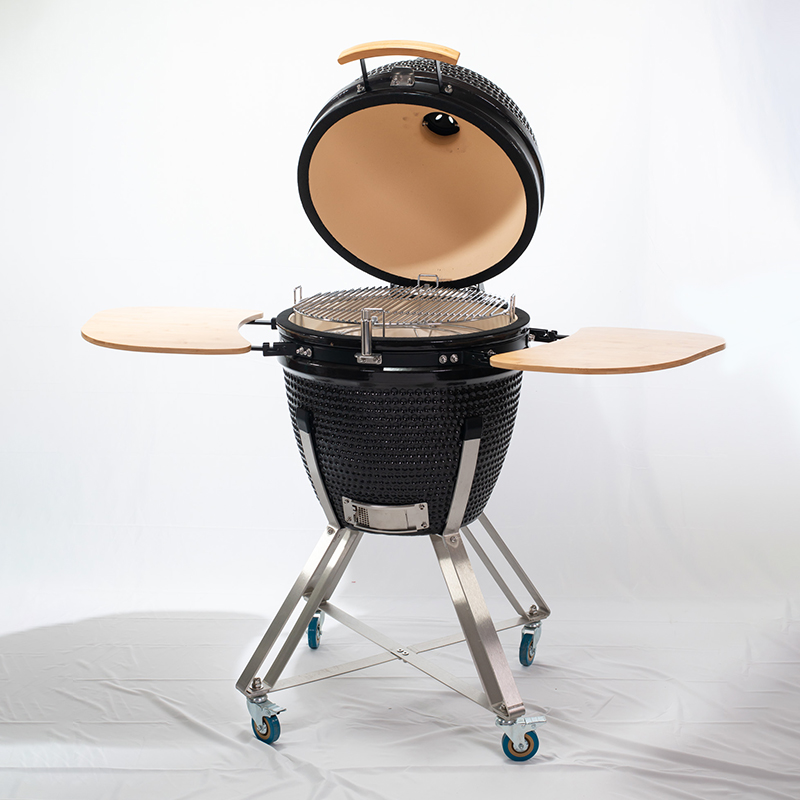
Thick Ceramic Thermal Mass: The Foundation of Cold‑Weather Performance
The biggest performance gap starts with construction material. Most traditional grills use thin steel or light‑gauge metal. These materials heat quickly, but they also dissipate heat just as fast. When cold air hits the thin walls, heat escapes rapidly. Even with a full load of charcoal, temperatures can swing wildly on cold days. You spend more time adjusting settings than actually cooking.
Kamado grills are built from dense, high‑grade refractory ceramic with impressive thermal mass. Think of this ceramic body as a heat battery. It absorbs heat from burning charcoal, stores large amounts of thermal energy, and releases it gradually and evenly. The thick walls resist heat loss in freezing or near‑freezing weather. Cold ambient air cannot easily penetrate the chamber, which is the core driver of kamado grill heat retention for cold weather. This property lets you maintain both low‑and‑slow smoking temperatures and high‑heat searing without constant intervention.
Airtight Gasket Seal Blocks Cold Air Infiltration
Much of the heat loss in cold‑weather grilling comes from air leaks, not just fuel burn. Traditional grills often have loose‑fitting lids, gaps around hinges, and no dedicated sealing. These small openings are barely noticeable in warm summer weather, but become major heat drains when it is cold and windy. Frigid outside air leaks in, while valuable cooking heat leaks out, creating uneven hot and cold spots and burning through charcoal much faster.
Premium kamado grills feature a fully sealed dome with heat‑resistant gaskets along the lid edge. When closed, the lid creates an airtight barrier. There are no unintended gaps for cold wind to enter. Combined with precision top and bottom dampers, you control airflow intentionally instead of fighting uncontrolled cold‑air intrusion. This sealed system preserves heat inside the grill, creating a stable internal cooking environment that is far less affected by outdoor cold.
360‑Degree Radiant Heat Compensates for Cold Conditions
Heat retention is more than just holding high internal temperatures — it is about consistent heat distribution. Traditional metal grills rely mostly on direct heat from burning charcoal. Once the metal walls cool down from cold outside air, there is no secondary heat source to warm the cooking space. Food can end up with burnt surfaces and undercooked interiors, a very common issue when grilling in cold weather.
Kamado ceramic walls absorb heat and radiate it outward in all directions. This radiant heat works alongside direct charcoal heat to warm every corner of the cooking chamber. Even when wind picks up or temperatures drop, stored radiant heat keeps cooking conditions steady. Meat stays moist, and you get uniform doneness that is hard to achieve on a traditional grill in cold weather.
Practical Benefits of Kamado Grill Heat Retention in Cold Weather
Less Charcoal Consumption
In cold weather, traditional grills burn through charcoal rapidly to offset constant heat loss. A kamado’s excellent heat‑holding capability means one load of charcoal can support many hours of smoking or high‑heat searing, even in low temperatures. You spend less on fuel and spend less time refilling charcoal.
Stable, Predictable Temperatures
Cold wind and low outdoor temperatures cause traditional grill temperatures to rise and fall unpredictably, ruining smoke cook timing and meat texture. The ceramic thermal mass of a kamado locks in your set temperature for hours, regardless of outside chill.
True Year‑Round Grilling Capability
Smoking brisket in autumn, searing steaks in winter, or baking outdoor pizza on cold days becomes straightforward. Thanks to strong kamado grill heat retention for cold weather, you do not have to cancel your barbecue plans because of cool weather.
Juicier, Better‑Tasting BBQ
The sealed, heat‑stable kamado environment locks in natural food moisture. Unlike cold‑weather cooking on a traditional grill, where frequent temperature adjustments and cold‑air exposure dry out meat, kamado cooks produce tender, juicy, well‑smoked results consistently.
Conclusion
When temperatures drop, the performance difference between kamado grills and traditional grills becomes obvious. Standard metal grills are optimized for mild weather and lack the insulation, thermal mass, and airtight sealing to counteract cold‑driven heat loss.
Thick ceramic construction, airtight gaskets, and all‑around radiant heating give kamado grills unmatched kamado grill heat retention for cold weather. You get stable cooking temperatures, reduced fuel waste, and superior food quality through fall and winter.
If you are tired of fighting temperature swings and high fuel use when grilling in cold weather, a kamado grill is a solid upgrade for all‑season outdoor cooking.
Target long‑tail keyword: kamado grill heat retention for cold weather