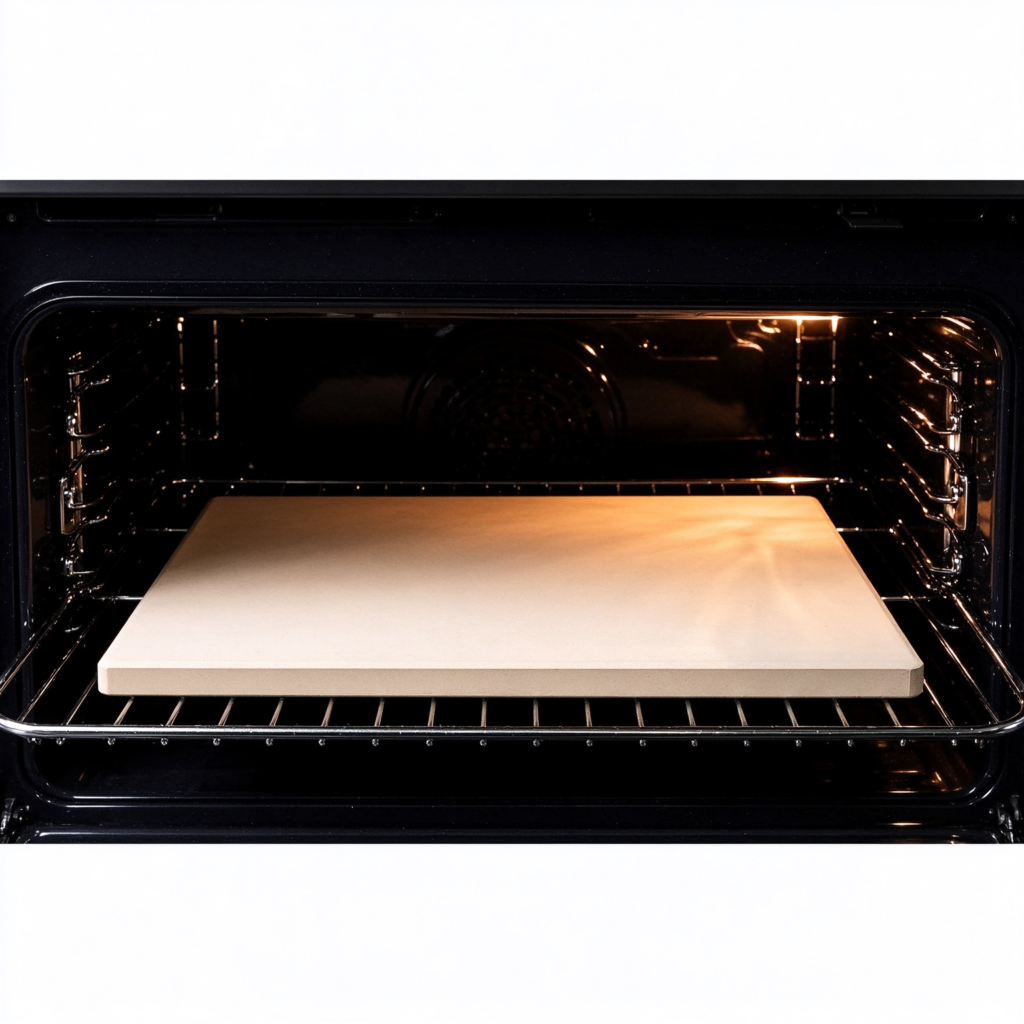
Few things ruin a homemade pizza night faster than hearing an unsettling crack from your pizza stone mid-bake.
Pizza stone cracking is one of the most common complaints we receive from retailers, home cooks and restaurant buyers across Europe. Many people assume all cracks are caused by poor stone quality. The truth is different: most pizza stone breaks happen from improper preheating and temperature shock. Some cracks, however, stem from raw material flaws or incomplete firing during manufacturing.
As a direct factory supplier of pizza stones for kamado grills, ovens and home baking, we share practical preheating rules, typical user mistakes, and how our production process is built to resist thermal cracking.
Step-by-Step Guide: Proper Pizza Stone Preheating
Slow, even heating is the core rule. Pizza stones are porous ceramic, and rapid temperature changes create uneven expansion that splits the material.
- Place the cold pizza stone into a cold oven or kamado grill first Never put a room-temperature or cold stone onto an already hot grill or preheated oven. This is the #1 cause of thermal shock cracking. Set the stone on the middle rack of your oven, or on the grill grate inside your kamado, before turning on the heat. Leave space around all sides for hot air circulation. Do not stack other baking trays or cookware against it.
- Ramp up heat gradually Turn your oven or kamado to your target baking temperature (typically 250°C–300°C / 475°F–575°F for pizza). Allow at least 45–60 minutes of preheating time. Thick pizza stones (1.5cm and above) need a full 60 minutes or longer. The stone absorbs heat much slower than air; the air may hit temperature quickly, but the stone itself is still cold inside.
- Keep the stone dry before heating Make sure the stone is fully dry. If you washed it recently, air-dry it for 24 hours or bake it at low heat (100°C) for 30 minutes first to evaporate trapped moisture. Trapped water turns to steam when heated and creates internal pressure that blows the stone apart.
- Transfer pizza gently; avoid cold toppings or wet dough directly on the hot surface Use a well-floured pizza peel. Do not dump ice-cold, heavily wet toppings straight onto the scorching stone. Large amounts of cold liquid hitting a hot surface creates instant thermal shock.
- Cool down slowly after use When baking finishes, turn off the heat. Leave the pizza stone inside the closed oven or kamado to cool naturally for several hours. Do not take it outside, set it on a cold countertop, or rinse it with cold water while it is still hot.
Common Mistakes That Break Pizza Stones
These bad habits account for over 70% of cracking cases we see from customer returns:
- Putting a cold stone into a blazing hot oven / kamado grill
- Short preheating time (only 10–20 minutes)
- Washing a hot stone with cold water
- Storing a damp stone then heating it
- Placing the stone directly over intense concentrated flame without heat diffusion
- Dropping, knocking, or setting heavy items on the edge of the stone
Two Types of Cracks: User Misuse vs. Manufacturing Defects
This is a key distinction for resellers and end users. Knowing the difference helps you handle after-sales questions clearly.
1. Cracking from improper use (thermal shock crack)
Features:
- Crack appears suddenly during heating or cooling
- Crack lines are jagged, often running across the whole stone
- The stone worked fine for multiple bakes before breaking
- Break happens after fast temperature change: cold water rinse, rushed preheat, cold wet food on hot stone
This kind of damage is not a product defect. Even high-grade pizza stone material will fail under extreme thermal shock.
2. Cracking from raw material or firing defects
Features:
- Stone cracks on the very first use, even with correct slow preheating
- Fine spiderweb internal crazing already visible before first heating
- Small hidden fissures inside the body from poor clay formulation, insufficient firing temperature or short kiln hold time
- Breakage happens with gentle, standard heating cycles
Low-cost manufacturers cut corners: they use cheap impure clay, shorten kiln firing cycles, or skip thermal stability testing. These stones have hidden weak points that fail easily, even when the user follows all instructions.
Factory Quality Process: How We Reduce Thermal Cracking Risk
As a professional pizza stone manufacturer matched for kamado grills and home ovens, we build thermal resistance into every batch.
✅ Carefully selected clay blend We use low-shrinkage, high-density refractory clay. The formula balances porosity and thermal stability, reducing internal stress when the stone heats and expands. Cheap clay with high impurity content expands unevenly and cracks easily.
✅ Full high-temperature kiln firing Our pizza stones go through a complete long-cycle firing at stable high temperature. Proper firing fully vitrifies the body, burns away volatile impurities and minimises hidden micro-fissures. Under-fired stones are the top source of early failure in budget pizza stone lines.
✅ Batch thermal shock testing (hot-cold cycling test) Every production lot is sampled for thermal shock testing. Test samples are heated to pizza baking temperature, then go through controlled temperature cycling to verify stability. We reject batches that show crazing or cracking during testing before packing and shipment.
✅ Consistent thickness and flatness control Uneven thickness leads to uneven heat absorption. Our moulding and finishing process keeps uniform thickness across the stone surface for balanced heating.
Final Quick Checklist for Your Pizza Stone
- Cold stone → cold oven/kamado
- Preheat 45–60 mins minimum
- Fully dry before heating
- No cold water when hot
- Cool gradually inside the cooker
- Store in a dry, ventilated place
A good quality pizza stone can serve years of perfect crispy pizza bakes. Quality material gives you a stronger foundation, but correct preheating is the simplest, most effective way to avoid cracking.
If you are a retailer or brand looking for stable, test-certified pizza stones compatible with kamado grills and home ovens, reach out to our team for OEM options and batch test reports.